 Ebook4all
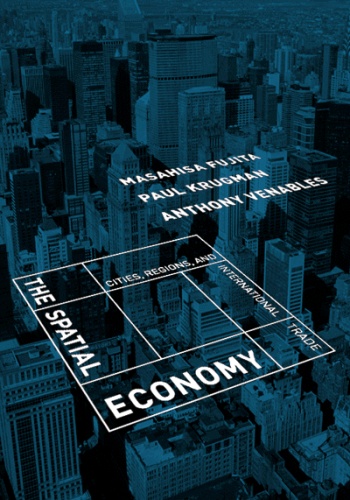
The Spatial Economy: Unveiling the Geography of Economic Activity
"The Spatial Economy," by renowned economist Paul Krugman, is a groundbreaking work that delves into the intricate relationship between space and economic activity. Imagine a world where economic forces shape the very landscape. This is the reality explored in "The Spatial Economy," where Krugman dismantles traditional economic models that often neglect the crucial role of location. Using powerful new tools from fields like industrial organization, international trade, and economic growth, he unveils a fascinating new paradigm: economic geography. Krugman masterfully guides readers through the complexities of this emerging field, demonstrating how economic forces drive the clustering and dispersion of businesses, industries, and even entire cities. He explores the role of agglomeration economies, where firms benefit from proximity to similar businesses, creating a virtuous cycle of growth and innovation. He also examines the dynamics of trade and transportation, revealing how the cost of moving goods and people influences spatial patterns of economic activity. "The Spatial Economy" is a captivating exploration of the invisible hand that shapes the geography of economic life. It challenges our understanding of traditional economic models and presents a new framework for understanding how location shapes economic outcomes. This book is essential reading for economists, policymakers, and anyone interested in the interplay between economic forces and the built environment.
Paul Krugman is a Nobel laureate in economics and a prominent voice in the field of economic policy. His work often focuses on international trade, economic growth, and the impact of globalization.
| Wydawnictwo | MIT Press |
| data wydania | 1999 (data przybliżona) |
| ISBN | 9780262561471 |
| liczba stron | 384 |
| słowa kluczowe | ekonomia |
| kategoria | biznes, finanse |
| język | angielski |
Komentarze i opinie
Brak zatwierdzonych komentarzy.